Pipelines and stages
A pipeline is the set of stages a deal moves through, and it is the backbone of every sales number you will ever look at. Conversion rates, forecast, where deals die — all of it is computed from stages.
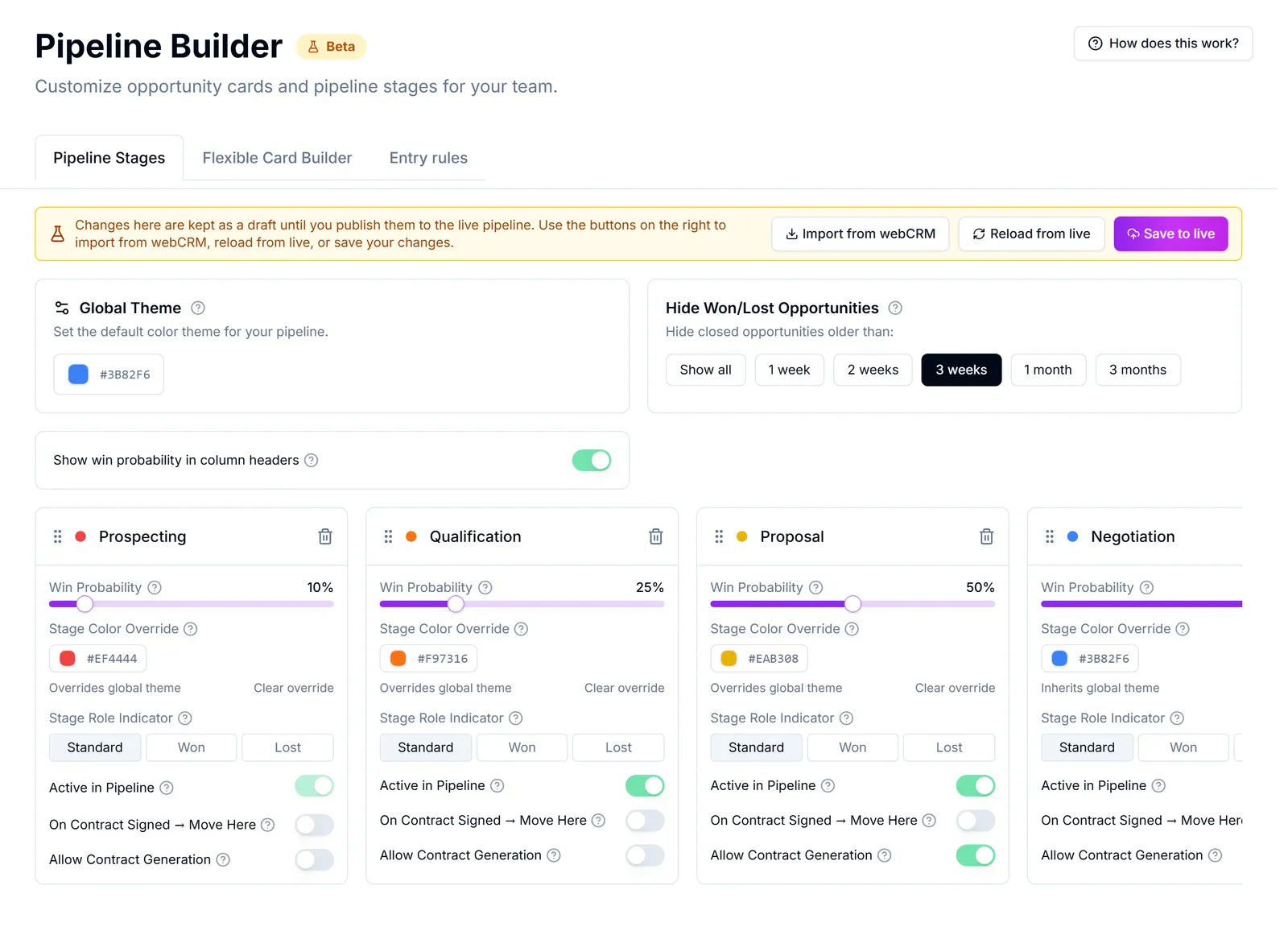
Two places edit them, and they are not the same:
- The stage list in settings — quick edits to names, order and probability. Set up your pipeline stages
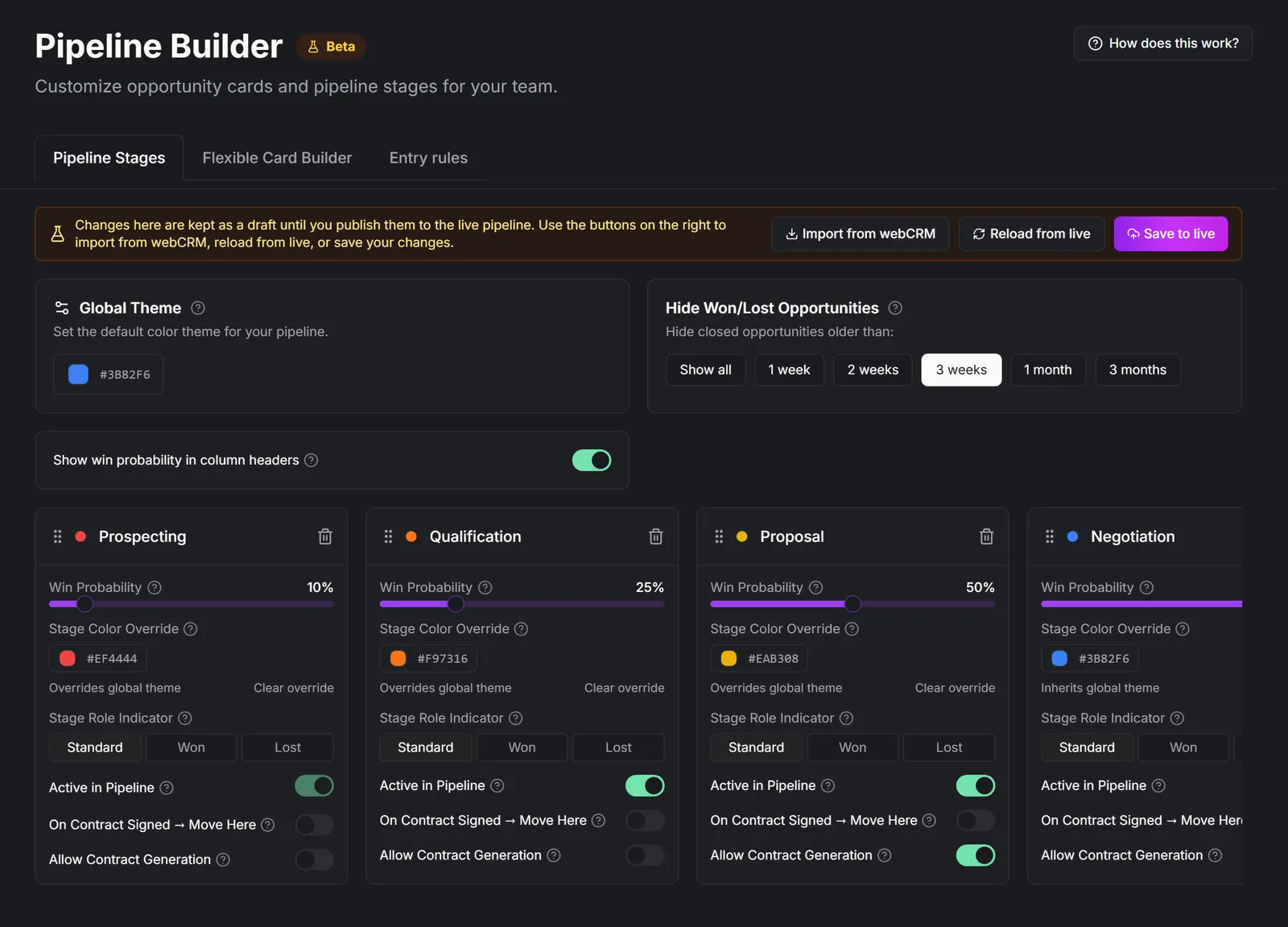
- Pipeline Builder — Customize opportunity cards and pipeline stages for your team. A full editor, with a draft you publish deliberately rather than edits that go live as you type. Edit your pipeline in the builder
Every stage has a role. Marks the stage as a Won or Lost outcome. Won/Lost stages count toward conversion metrics and trigger close-date logic. "Standard" stages are everything in between. Getting Won and Lost marked correctly is not cosmetic — an unmarked won stage means your conversion rate is wrong everywhere.
Win probability per stage is what turns a list of deals into a forecast: a stage at 20% contributes a fifth of its value. Set them from what actually happens, not from optimism. See Reports.
Fewer stages than you think. Stages should represent a change in the *buyer's* commitment, not a step in your admin. Six is plenty; twelve means nobody updates them honestly and the forecast becomes fiction.
Entry rules can require information before a deal is allowed into a stage: Entry rules — require information before a deal moves on.
Moving a deal through is Move an opportunity to another stage.
The Pipeline Builder is in beta. The pipeline it edits is entirely real and live, so treat the publish step with the same care you would any change everyone sees; it is the editor around it that is still settling.
In this section
Edit your pipeline in the builder
Draft the stages, see the diff, then publish to everyone
Entry rules — require information before a deal moves on
Stop a deal entering a stage until the fields you need are filled in
When you need more than one pipeline
One pipeline per genuinely different sales process — and why that is usually fewer than you think