Goals and OKRs
Goal tracking, under Goals, holds the objectives your company is working towards and the measurable results that say whether you got there.
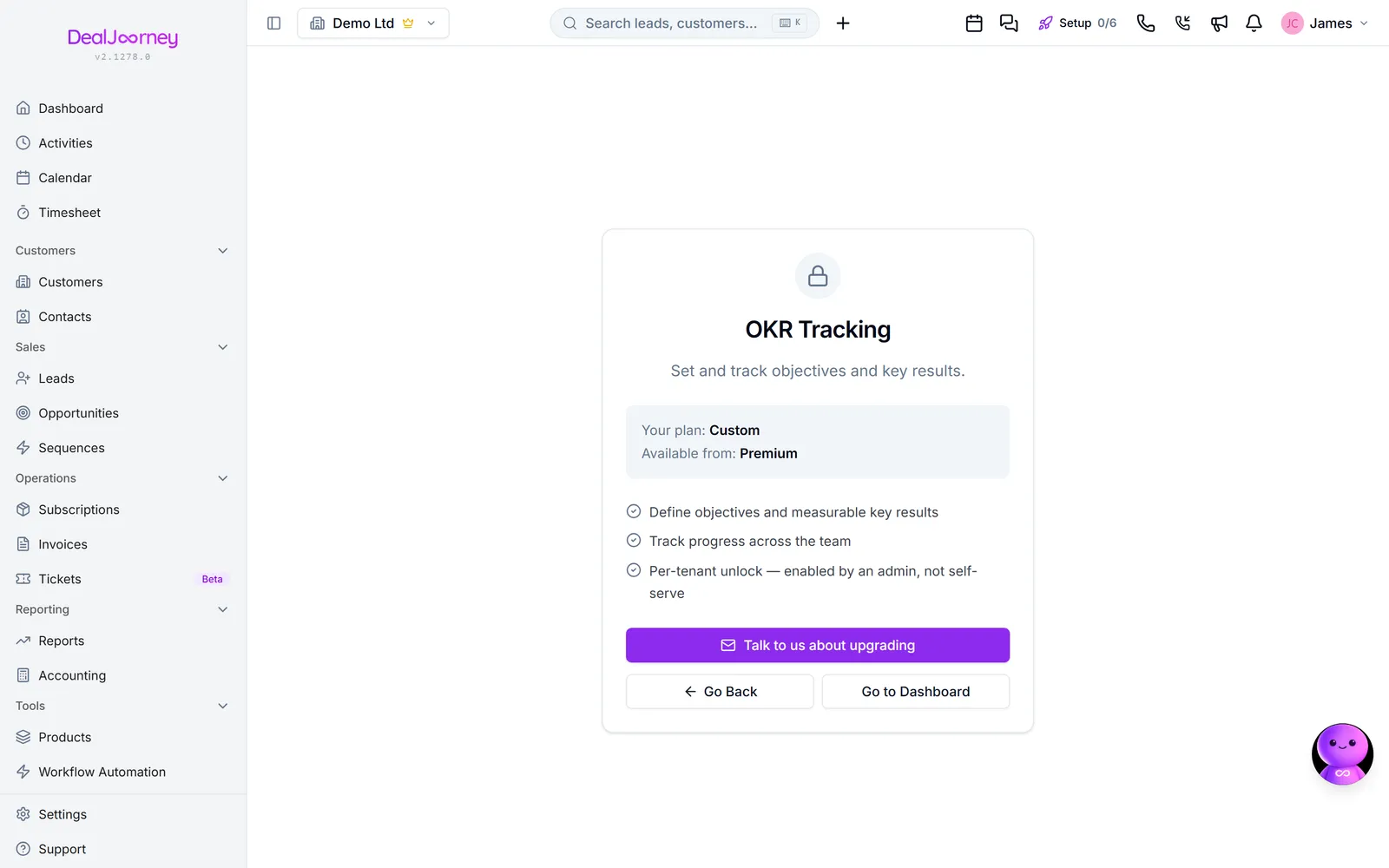
An objective is what you are trying to achieve, in words. A key result is the number that settles whether it happened. "Be stronger in Jutland" is an objective and is unarguable in both directions; "twelve new customers in Jutland by the end of Q3" is a key result, and it either happened or it did not.
Progress comes from check-ins. Somebody records where a target stands: Record a progress update for this target. A goal nobody checks in on is not tracked, it is just written down, and the page will show it frozen wherever it started.
Link the work to the goal. Projects can be attached to an objective, so it is answerable which work is actually driving it: Set up objectives and key results on the Goals page, then link projects to them here to connect strategy to delivery. An objective with no work attached is usually a sign that nobody has decided how it will be achieved.
Closing a period. At the end of a quarter you grade what happened and decide what carries forward: Grade your goals and roll unfinished work into the next period. Rolling unfinished work over deliberately is the point: it forces the question of whether the goal still matters rather than letting it quietly disappear.
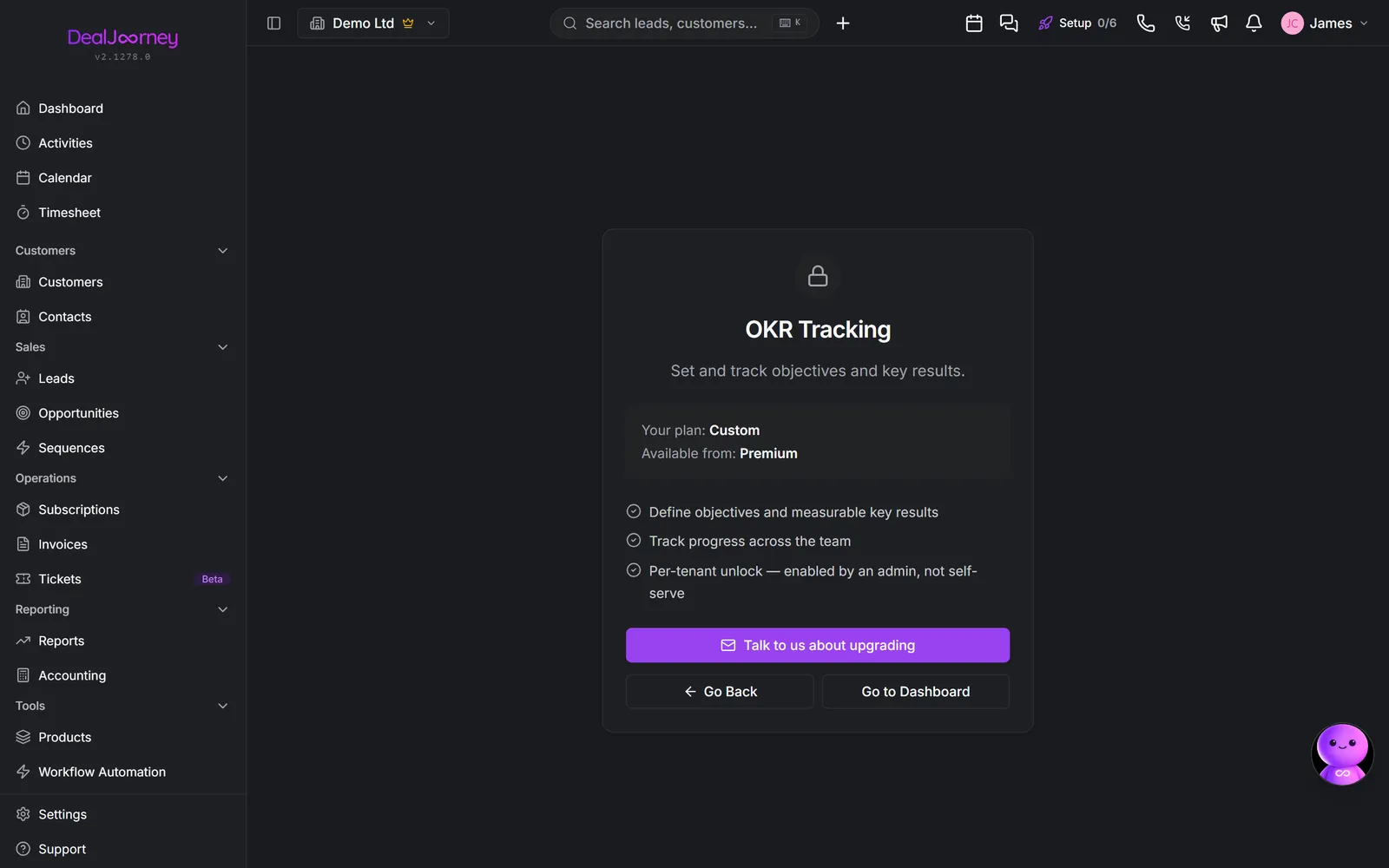
Goal tracking is off by default and enabled per company.
In this section
Create a goal
Add an objective for the current period, with the numbers that will say whether you got there
Check in on a target
Record where a number stands, or mark a milestone done, so the goal actually moves
Close out a period
Grade what happened, close the period, and roll unfinished goals into the next one
The OKR tabs
Goals, Table and Teams are three views of the same objectives
Sales budget vs sales
Set a monthly sales budget for the company, a person or a team and compare it with what was actually won
The Analytics tab
Are you on pace, and where is progress actually concentrated
Write a retrospective
Close a period with the numbers, an AI first draft, and the team's own account
The History tab
Completed periods side by side, so you can see whether you are improving